




One connected freight process
Enterprise Freight Savings
Control Freight Cost Before, During and After the Shipment
Logistware connects freight sourcing, shipment readiness and final invoice review so enterprise transportation teams can make stronger decisions at every stage—with direct carrier access, AI-assisted analysis and human control.
Built for large-scale freight operations
Direct carrier connection. Connected enterprise control.
Logistware is a Canadian logistics software company providing enterprise transportation technology across the freight lifecycle. Bring carrier sourcing and decision support into a structured process so appropriate carriers can respond directly, with the records your team needs to evaluate the fit.
One shipment. Three control points.
Compare the commercial decision. Protect execution. Verify the final charge.
A freight budget can change before a lane is awarded, while the shipment is moving or after the final invoice arrives. Logistware gives the responsible team a clear control point at each stage, with the records needed to make a better next decision.
Direct connection to the right carriers
The right rate only matters if the carrier can support the lane.
Compare qualified carrier options against the freight requirements. A competitive offer needs equipment, capacity, timing and service fit behind it.
Structured carrier sourcing
Give appropriate carriers a clear request and a direct way to respond. Compare the offer and operating fit in one view, with less reliance on scattered calls, email chains and spreadsheets.
Your carrier model stays yours
Use your existing approved or dedicated carrier network. Where appropriate, the Logistware load board can support broader carrier access. Your team reviews qualification information and owns the selection.
01 · Before the shipment · RFQ Intelligence
Compare freight rates before awarding the lane
Use a structured request for quotation to compare price, timing and service fit before the team commits. The shipper enters the lane requirements, the load board presents the RFQ to carriers that fit the request, and the decision-maker can review the award with a complete record.
- Enter origin, destination, equipment, timing and shipment requirements.
- Invite manually vetted carriers that fit the lane and equipment.
- Receive bids in one load board view instead of scattered calls and email.
- Compare current/reference cost, linehaul, fuel, capacity, transit, equipment and service fit.
- Use AI-assisted offer analysis as decision support; the team selects the carrier and records the award.
02 · During the shipment · Lane Continuity
Protect the pickup window with earlier action
When a carrier cannot perform, a freight issue can become an operational issue. Logistware keeps confirmation, driver and equipment assignment, qualification, tracking and estimated arrival visible so the team has time to respond before the pickup window is lost.
- Review configurable T-24, T-12, T-4 and T-90 checkpoints before required pickup.
- Surface overdue confirmation, missing assignment or inactive tracking.
- Compare live position and estimated arrival with the appointment window.
- Review qualified backup options using equipment fit, proximity, availability and qualification; capacity is not guaranteed.
- Keep carrier communication, ownership and next actions in one record.
T means time before required pickup. Checkpoints and signals can be configured to the customer’s process. Readiness starts before the truck moves.
AI-assisted analysis, human accountability
AI-assisted analysis surfaces the signal. The assigned team reviews the facts, contacts the carrier and decides whether to act on a qualified backup option. AI does not automatically replace the carrier.
03 · After the shipment · Invoice Leakage Control
Verify the final invoice against the shipment record
After delivery, compare the awarded rate, final invoice and shipment evidence before payment. A clear record helps finance and operations route variances for review and gives the team better information for the next lane decision.
- Compare the awarded rate with the final invoice and agreed terms.
- Review BOL, POD, tracking, appointment and delivery records together.
- Route an unexpected variance to the responsible person for review.
- Keep rate, invoice, carrier and lane history available for reporting.
- Use completed shipment results to improve future sourcing decisions.
Why this matters
Freight cost can change at every stage.
Cost control should continue beyond the award. Earlier commercial, operational and financial visibility can help teams reduce avoidable cost without promising a particular saving.
Poor rate visibility can lead to an inefficient award.
Compare carrier offers and identify cost opportunities before commitment.
A late readiness problem can create expensive recovery decisions.
See risk earlier and give the transportation team more time to respond.
Invoice differences can go unnoticed when records are disconnected.
Compare final charges with agreed terms and surface questions for review.
Logistware creates a control point at each stage. Outcomes depend on the freight requirements, carrier response, available evidence and the team’s decisions.
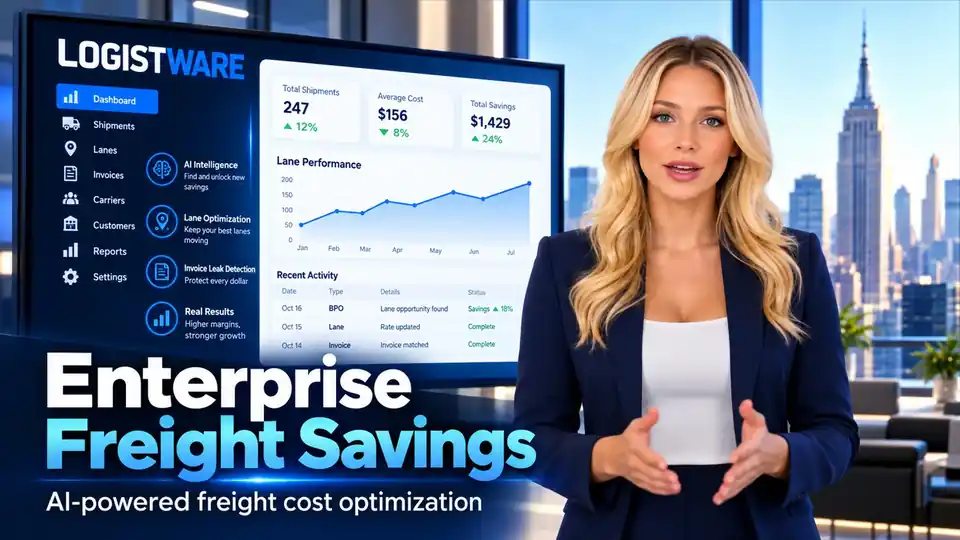
Product demonstration
See the complete Enterprise freight story.
See how Logistware connects freight sourcing, shipment continuity and final cost review into one before / during / after process.
Commercial + operational information
One connected freight record, from award to review.
Keep lane requirements, the commercial decision and execution evidence connected. The final invoice review can refer back to what was agreed and what happened, while completed history adds context for future sourcing.
Commercial decision
- Lane requirements
- Carrier offer
- Awarded rate
- Fuel
- Capacity
- Equipment
Operational execution
- Carrier confirmation
- Driver
- Equipment
- Tracking
- ETA
- Communication
Evidence + cost review
- BOL
- POD
- Shipment evidence
- Final invoice
- Variance review
People make the decision.
AI-assisted freight analysis, risk signals and variance review help prioritize attention. Your team awards freight, decides carrier actions and approves or resolves invoice questions.
Understand the complete offer
The freight decision is more than a linehaul rate.
Evaluate the full cost structure alongside operating fit. Where applicable, government-linked fuel reference information can support comparison and reduce manual fuel-data checking.
Fuel calculations differ by carrier and agreement. Compare the reference with the carrier’s proposed charges and agreed terms; one formula does not apply to every carrier.
Enterprise freight operations
The enterprise value is better visibility and decision context.
Connect carrier access, commercial analysis and shipment information around the people accountable for freight decisions. These are areas of potential value—not measured customer results or guaranteed outcomes.
Better Rate Visibility
Compare offers, cost components and reference/current cost.
More Direct Carrier Access
Create a structured response process for carriers that fit your requirements.
Earlier Risk Visibility
Review readiness while there is still time to respond.
Less Avoidable Manual Work
Keep responses, records and review context together.
Connected Freight Records
Carry the commercial decision through execution and invoice review.
Stronger Invoice Review
Assess differences with agreed terms and shipment evidence.
Better Decision Context
Use completed freight history in future RFQs and lane discussions.
Potential Freight Cost Opportunities
Identify differences worth investigating before committing or paying.
One process, human accountability. Better visibility helps your team evaluate cost, capacity and execution together. Commercial and operational decisions remain with the responsible people.
A technology partner that can grow with you
Your next freight problem may not fit into a standard software box.
The existing Enterprise Freight Savings technology covers before, during and after the shipment. For another transportation or logistics challenge, Logistware can first understand and analyze the business requirement, then define whether and where technology may create value.
Customer-specific solutions, integrations and services are separately scoped. Discovery defines the work and the potential value; it does not include unlimited development.
Start the conversation
Start with one lane, one process or one freight problem.
Show us where transportation cost, carrier access or shipment execution is difficult today. We will help identify where Logistware technology can create greater visibility and control.
Enterprise freight savings questions
How can Logistware help identify freight cost opportunities?
Logistware creates control points before, during and after the shipment. Teams can compare carrier offers and cost components, review readiness risk earlier and assess invoice differences against agreed terms and shipment evidence. Opportunities and outcomes depend on the freight requirements, carrier response and team decisions.
How does Logistware connect companies directly with carriers?
Enterprise teams can structure lane requirements and invite appropriate carriers to respond directly. The team compares offers, qualification information, equipment, capacity, timing and service fit in a connected process rather than relying only on scattered calls and email.
What happens before freight is awarded?
RFQ Intelligence helps organize lane requirements, carrier bids, current or reference cost, linehaul, fuel, capacity, transit and equipment fit. AI-assisted offer analysis supports review, while the responsible team selects the carrier and records the award.
How does Lane Continuity help before a missed pickup?
Configurable checkpoints such as T-24, T-12, T-4 and T-90 can help the team review carrier confirmation, driver and equipment assignment, tracking and ETA before required pickup. Earlier signals give the team more time for follow-up, escalation or qualified backup review. Backup capacity is not guaranteed.
How are final freight invoices reviewed?
Invoice Leakage Control connects the final invoice with the awarded rate, agreed terms and available BOL, POD, tracking, appointment and communication records. Differences are surfaced for human review; a variance does not automatically make a charge invalid.
Does Logistware automatically choose or replace carriers?
No. AI surfaces information and supports prioritization. People decide the award, carrier follow-up, backup action and invoice resolution. Logistware does not automatically replace a carrier or reject an invoice.
Can Logistware work with an existing approved carrier network?
Yes. Enterprise processes can use a company’s approved or dedicated carrier network for sourcing, readiness, communication, records and exception handling. The team can review qualified backup options where appropriate without being required to post freight publicly.
Is Logistware only a load board?
Logistware includes a load board and enterprise transportation technology for RFQ analysis, carrier readiness, shipment visibility, communication, documents and invoice review. Enterprise Freight Savings connects these capabilities across the freight lifecycle.
Can enterprise-specific logistics problems be scoped separately?
Yes. Logistware can first analyze the business requirement and identify where technology may create value. Customer-specific work is then separately scoped around requirements, integration, complexity, development, testing and deployment.
How does a large company get started?
Start with one lane, one process or one freight problem. Visit Logistware Enterprise or contact the team to discuss transportation cost, carrier access, shipment execution and the practical starting point for an evaluation.