




Cross-Border Freight Between Canada and the United States
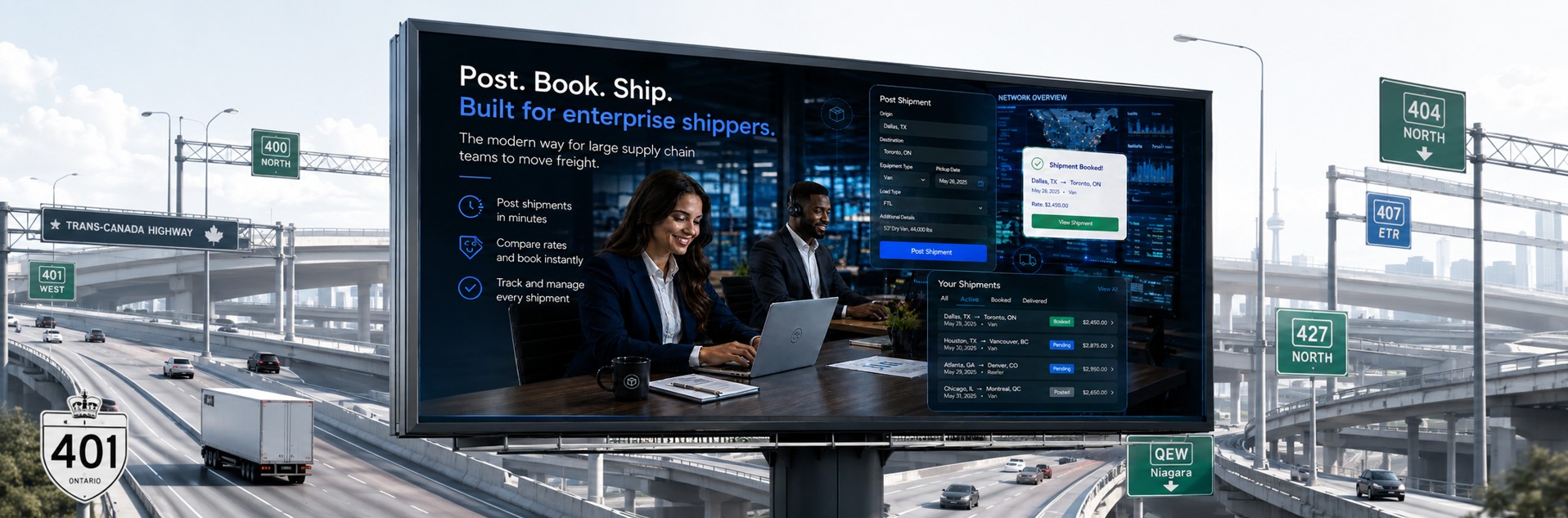
Cross-Border Freight Between Canada and the United States
Move freight across the Canada–U.S. border with better information before the truck reaches the crossing. Logistware supports cross-border freight between Canada and the USA by connecting shippers, freight brokers and carriers with load discovery, digital communication, shipment documents and freight visibility in one connected transportation workflow.
What Is Cross-Border Freight?
Cross-border freight is commercial cargo transported from one country into another. For road freight between Canada and the United States, the shipment involves both the physical transportation movement and customs-related information required for the goods to enter the destination country.
That makes cross-border transportation different from a domestic load. The shipper, importer, carrier, customs broker and other parties may each have information or responsibilities that need to be coordinated before the freight reaches the border.
Logistware helps connect the freight marketplace and transportation workflow: finding loads or carriers, keeping shipment communication organized, exchanging freight documents and maintaining visibility while the load is moving.
Canada-to-U.S. and U.S.-to-Canada Cross-Border Loads
The direction of the freight matters because the importing country determines the customs process that applies to the commercial goods entering it.
Canada to the United States
Freight originating in Canada and entering the United States should be planned with the complete route, equipment requirements, shipment information and U.S. import process in mind.
- Confirm Canadian pickup and U.S. destination
- Identify the required truck or trailer
- Coordinate appropriate U.S. customs information
- Confirm the carrier can perform the complete cross-border move
- Keep freight documents available to the appropriate parties
United States to Canada
Freight originating in the United States and entering Canada should be planned around the Canadian destination, carrier requirements and applicable CBSA import and release process.
- Confirm U.S. pickup and Canadian destination
- Identify equipment and shipment requirements
- Coordinate appropriate Canadian import information
- Confirm cross-border carrier capability
- Keep required shipment information organized before arrival
How to Plan a Canada–U.S. Cross-Border Shipment
The specific requirements depend on the goods, direction of travel and parties involved, but a well-prepared shipment starts with accurate information before transportation begins.
Define the Shipment
Identify the commodity, weight, dimensions, value, origin, destination and any special handling requirements.
Select the Equipment
Make sure the truck or trailer fits the freight as well as the complete Canada–U.S. route.
Prepare Border Information
Coordinate the importer, customs broker and appropriate documentation or electronic filing requirements for the destination country.
Confirm Carrier Fit
Make sure the transportation provider is suited to the cross-border lane, equipment and shipment requirements.
Move & Monitor
Keep transportation communication, documents and shipment visibility connected while the freight moves toward delivery.
What Should Be Checked Before the Truck Reaches the Border?
Customs requirements vary by shipment. The important operational principle is to identify missing information before the truck arrives at the border rather than after it is already waiting there.
This information is general freight-planning guidance and is not customs, legal or tax advice. Importers and carriers should follow current CBSA, CBP and customs-broker requirements applicable to their shipment.Customs requirements can change. For authoritative information, use the government resources applicable to the shipment.
PARS, PAPS and Electronic Truck Manifest Information
Cross-border trucking uses terminology that can be unfamiliar to businesses that normally move only domestic freight. Knowing the terms helps teams ask the right questions before the shipment reaches the border.
PARS
The Pre-Arrival Review System is one of the Canadian commercial-goods release processes used with CBSA. The importer or customs broker is responsible for the appropriate release submission and shipment process.
PAPS
The Pre-Arrival Processing System is associated with commercial shipments entering the United States and can be connected with CBP’s electronic truck-manifest process.
Electronic Manifests
Commercial truck carriers may have advance electronic manifest obligations when entering the United States. The responsible carrier or agent should follow current CBP requirements.
Cross-Border Freight for Shippers and Carriers
The Canada–U.S. freight market depends on both sides: businesses that need freight moved and transportation providers looking for suitable international loads.
For Shippers & Freight Brokers
Make the complete cross-border shipment clear so carriers can determine whether the freight fits their equipment, lane and operating requirements.
- Post Canada-to-U.S. or U.S.-to-Canada freight
- Identify pickup and delivery locations
- Specify equipment and freight requirements
- Connect with transportation capacity
- Keep shipment communication organized
For Carriers & Dispatchers
Search cross-border freight based on where your equipment is available, where the load is going and whether the complete international movement fits your operation.
- Find northbound and southbound freight
- Review equipment requirements
- Evaluate pickup and delivery timing
- Consider the complete cross-border lane
- Manage freight after a load is selected
Cross-Border Loads by Equipment Type
An international border does not change the physical requirements of the freight. The correct truck or trailer still depends on the commodity, dimensions, weight and handling requirements.
Dry Van Cross-Border Loads
Enclosed transportation for suitable packaged, palletized and general commercial freight.
Explore Dry Van Loads → ❄Reefer Cross-Border Loads
Temperature-controlled freight requiring refrigerated transportation across the Canada–U.S. border.
Explore Reefer Loads → ↔Flatbed Cross-Border Loads
Open-deck freight that requires flatbed transportation and suitable international route planning.
Explore Flatbed Loads → ⚡Hot Shot Freight
Smaller or time-sensitive freight suited to hot shot equipment and an appropriate cross-border operation.
Find Hot Shot Loads → ◫Sprinter Van Freight
Smaller commercial freight that fits cargo or Sprinter van equipment and the applicable international operating requirements.
Explore Sprinter Van Loads → +LTL Cross-Border Freight
Less-than-truckload freight that uses only part of available truck capacity while moving between Canada and the United States.
Explore LTL Loads →What Makes a Good Cross-Border Freight Match?
A carrier can be a good domestic transportation provider without necessarily being the right fit for every Canada–U.S. shipment. Evaluate the complete movement before making the match.
Complete Lane
Confirm that the carrier can service both the origin and destination rather than only one side of the border.
Equipment Fit
Make sure the truck or trailer matches the commodity, dimensions, weight and handling requirements.
Border Readiness
Confirm that the responsible parties have coordinated the applicable customs and shipment information before the truck reaches the crossing.
Appointment Timing
Consider pickup, border processing and delivery requirements when evaluating the shipment schedule.
Communication
Make sure shipment-status and border-related questions can reach the appropriate transportation participants quickly.
Delivery Position
Carriers should consider where the truck finishes after delivery and whether the destination supports their next planned freight movement.
Tools That Support Cross-Border Freight
Customs processing is only one part of an international truckload. Transportation teams still need to find capacity, communicate, exchange freight documents and maintain shipment visibility.
Post Cross-Border Freight
Add the complete origin, destination, equipment requirement, freight details and timing so transportation providers can evaluate the opportunity.
Learn how to post freight →Find Truck Capacity
Connect freight with transportation providers that fit the shipment’s equipment, route and operating requirements.
Find trucks for freight →Digital Document Exchange
Keep transportation documents connected to the freight workflow so the appropriate parties can access shipment information when needed.
Explore freight document exchange →Live Freight Communication
Keep pickup, border, appointment and delivery conversations associated with the shipment rather than scattered across unrelated channels.
Explore load board live chat →Real-Time Freight Tracking
Maintain shipment visibility while freight moves between pickup, the international route and final delivery.
Explore real-time freight tracking →Freight Carrier Sourcing
Review transportation options and consider carrier information, equipment compatibility and lane fit before assigning freight.
Find freight carriers in Canada →Continue Planning Your Canada–U.S. Freight
Use the appropriate Logistware resource depending on whether you are posting freight, searching for truck loads or sourcing transportation capacity.
Questions About Canada–U.S. Cross-Border Freight
What is cross-border freight between Canada and the United States?
Cross-border freight is commercial cargo transported from Canada into the United States or from the United States into Canada. In addition to normal transportation requirements, the shipment must follow the applicable customs and import procedures for the country the goods are entering.
How do I find cross-border truck loads?
Start with the truck’s location, equipment, availability and the international lanes your operation can service. Then review freight opportunities based on origin, destination, equipment, schedule and the requirements of the complete cross-border movement. See Find Truck Loads in Canada .
How can a shipper post Canada–U.S. freight?
Provide the Canadian and U.S. origin or destination, freight description, equipment requirement, weight and timing so carriers can determine whether the shipment fits their operation. The importer and customs-related parties should separately coordinate the applicable border-processing requirements. Learn more about posting freight in Canada .
What documents are commonly involved in cross-border freight?
The exact documentation depends on the goods and import process. Commercial shipments may involve documents such as a commercial invoice, bill of lading and information required for customs release or electronic manifest processes. Always confirm current requirements with the applicable customs authority, importer and customs broker.
What is PARS for freight entering Canada?
PARS stands for Pre-Arrival Review System and is one of the release processes used by the Canada Border Services Agency for commercial goods entering Canada. The importer or customs broker should follow current CBSA requirements for the specific shipment.
What is PAPS for freight entering the United States?
PAPS stands for Pre-Arrival Processing System and is associated with commercial shipments entering the United States. Commercial truck transportation also uses CBP’s ACE electronic manifest processes. Carriers and brokers should follow current CBP requirements.
Can I find different equipment types for cross-border freight?
Yes. Cross-border freight can require different equipment depending on the shipment, including dry vans, refrigerated trailers, flatbeds, hot shot equipment, cargo vans and other specialized transportation.
Can I track a cross-border shipment?
Logistware provides freight-visibility tools designed to keep shipment information connected while transportation is underway. Learn more about real-time freight tracking .
Does a load board replace a customs broker?
No. A freight load board helps connect transportation demand and capacity and can support the shipment workflow. Customs release, importer obligations and broker filings are separate processes that must follow the requirements of CBSA, CBP and other applicable authorities.
What should carriers review before accepting a cross-border load?
Review the complete origin and destination, equipment requirements, commodity and freight details, pickup and delivery schedule, border responsibilities, shipment documentation and whether your operation is suitable for the complete international movement.
Connect Canada–U.S. Freight With the Right Transportation Capacity
Find cross-border loads, post international freight and keep transportation communication, documents and shipment visibility connected through Logistware.
Access the Logistware Load Board →