
Sprinter Van Load Board: Find Cargo-Van Freight Through the Logistware Platform
The Sprinter Van Load Board is the equipment-specific freight experience within Logistware for carriers and transportation teams operating Sprinter vans and similar cargo-van equipment. Logistware is the actual Canadian freight platform where carriers can explore available freight, while shippers and freight brokers can post transportation requirements and source capacity.
Sprinter vans can be useful for freight that does not require full truckload equipment, including local and regional deliveries, smaller commercial shipments, time-sensitive freight and other loads whose dimensions, weight and handling requirements fit the vehicle being used. The individual carrier remains responsible for confirming that each shipment safely fits its equipment, payload and operating authority.
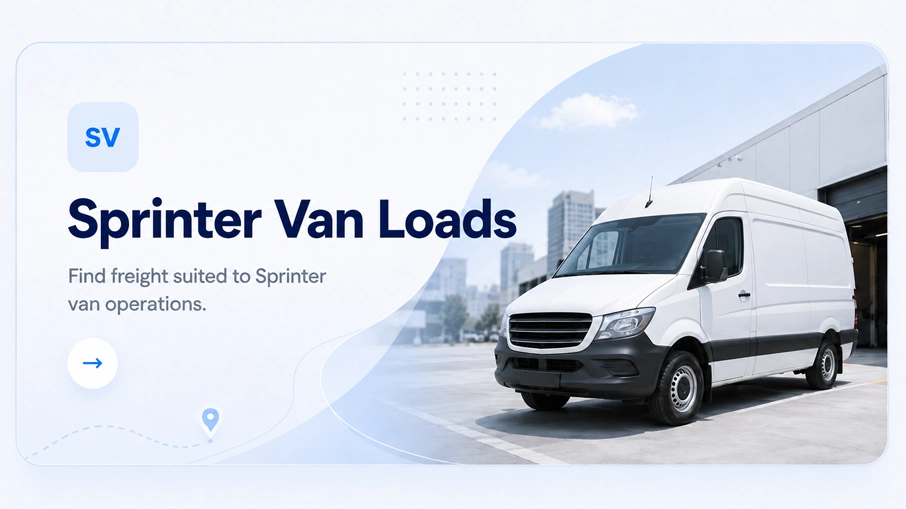
Master Urban Delivery Opportunities with a Sprinter Van Load Board
Compact cargo vans can give carriers flexibility when serving freight that does not require a tractor-trailer. That can include commercial deliveries, regional freight, warehouse transfers, smaller expedited shipments and pickup or delivery locations where a compact vehicle may be appropriate.
The role of the Sprinter Van Load Board is to help transportation professionals identify freight opportunities and review the shipment information needed to decide whether the load fits their equipment and operation.
Evaluate the Freight Before Accepting the Load
Equipment type alone does not determine whether a shipment belongs in a Sprinter van. Carriers should review the dimensions, weight, number of pieces, loading method, delivery requirements and any special handling information associated with the freight.
- Origin and Destination
Review where the freight begins and ends, including whether the complete lane makes sense for your available equipment and preferred operating area.
- Cargo Dimensions and Weight
Confirm that the shipment can be safely accommodated by the actual van being operated rather than assuming that all cargo-van freight will fit every Sprinter configuration.
- Pickup and Delivery Windows
Time-sensitive freight may involve specific appointment windows. Carriers should evaluate whether those requirements fit their schedule before accepting the shipment.
- Loading and Delivery Requirements
Dock access, hand loading, palletized freight, commercial building access and other shipment details may affect whether a particular van and driver are suitable for the movement.
Urban Freight Without Unsupported Navigation Claims
City deliveries can involve traffic, parking restrictions, loading zones, building access requirements and municipal rules. Those conditions can change independently of a load board.
Logistware therefore keeps the freight opportunity, shipment information and communication connected without claiming that the platform automatically maps every bridge clearance, controls parking availability or guarantees municipal compliance for every Canadian city.
Explore Available FreightVerified Sprinter Van Load Board Connections Through Logistware
Finding freight is only one part of the transportation relationship. Carriers, shippers and freight brokers also need useful business information before deciding who they want to work with.
Logistware uses a registration and manual vetting workflow before platform approval. That review belongs to the broader Logistware platform rather than a separate Sprinter-van certification program.
Better Business Context Before Freight Moves
Member vetting creates an additional layer of review before platform access, but it does not replace the due diligence required for an individual shipment or transportation relationship.
- Business and Profile Information
Members provide required business and account information during the Logistware registration process.
- Applicable Authority and Documentation
Where relevant to the transportation operation, applicable authority, insurance and other required documents can be submitted during registration.
- Manual Review Before Platform Approval
Submitted information and applicable documentation enter Logistware’s manual review process before account access is approved.
See How Logistware Vetting Works
Equipment Fit Still Requires Carrier Judgment
A vetted account does not mean every shipment is suitable for every Sprinter van. Carriers should independently confirm cargo size, weight, securement, insurance, operating authority and any shipment-specific requirements before accepting freight.
Specialized Cargo Opportunities on the Sprinter Van Load Board
Some smaller shipments require more attention than ordinary general freight. Electronics, medical equipment, fragile items, specialty retail products and other sensitive cargo may include additional handling, insurance, security or delivery requirements.
Logistware can help make those requirements visible within the freight workflow, but it does not automatically certify a carrier for white-glove, pharmaceutical, food-grade or high-value transportation simply because that carrier operates a Sprinter van.

Match Specialized Freight to Actual Capabilities
Specialized freight should be evaluated according to the commodity and the specific requirements of the shipment, not simply according to the body style of the vehicle.
If the freight requires temperature control, additional cargo insurance, special securement, controlled access or another specialized service, those requirements should be confirmed before the shipment is accepted.
- High-Value Electronics and Technology Equipment
Sensitive electronics may require careful handling, securement or additional cargo protection. Those requirements should be communicated directly through the shipment information.
- Fragile and Specialty Cargo
Fragile freight may require additional packaging, securement or handling. The carrier should confirm that its equipment and operating process are appropriate for the actual commodity.
- Medical and Healthcare Equipment
Medical equipment may involve time-sensitive or specialized handling requirements. Any regulatory, temperature or handling requirements should be verified for the specific shipment.
- Temperature-Sensitive Freight
A temperature-sensitive shipment requires suitable temperature-controlled equipment and procedures. A standard cargo van should not be treated as refrigerated equipment unless it is actually configured and qualified for that requirement.
Specialized Freight Without Invented Premium-Rate Guarantees
Specialized transportation can involve different pricing from ordinary freight, but rates depend on the actual shipment, lane, equipment, service requirements and commercial agreement.
The Sprinter Van Load Board therefore helps users evaluate freight opportunities without promising premium rates or guaranteed specialized cargo simply because a carrier uses compact van equipment.
Sprinter Van Load Board Freight for E-Commerce and Express Delivery
E-commerce and commercial distribution can create smaller, time-sensitive freight movements between warehouses, businesses, distribution facilities, retailers and other delivery points.
Sprinter vans and similar cargo vehicles may be suitable for some of these shipments when the freight fits the vehicle and the carrier can meet the pickup, handling and delivery requirements.
Smaller Freight Can Still Require Detailed Coordination
A shipment does not become simple merely because it fits inside a cargo van. Multiple pieces, narrow delivery windows, commercial receiving requirements, returns or other instructions can still affect how the transportation should be planned.
- Warehouse-to-Business Freight
Smaller commercial shipments can move between distribution facilities, warehouses, retailers and business locations when cargo dimensions and weight are appropriate for the vehicle.
- Time-Sensitive Delivery Requirements
Expedited freight may involve tight pickup or delivery windows. Carriers should confirm that the timing and entire lane fit their schedule before accepting the load.
- Returns and Reverse Freight
Some commercial supply chains create return movements or reverse-logistics freight. Those shipments can be posted and evaluated like other transportation opportunities when the freight fits the available equipment.
- Multi-Stop Requirements
A shipment may include more than one pickup or delivery. The complete stop sequence should be reviewed before a carrier accepts the freight rather than assuming that every cargo-van opportunity is a simple point-to-point movement.
E-Commerce Freight Without Unsupported Retail Integrations
Logistware can support freight discovery, shipment communication, documents and visibility without claiming direct integration with every major e-commerce platform, parcel carrier or retailer.
That keeps the Sprinter Van Load Board focused on the transportation workflow that Logistware actually provides.
Cheaper. Smarter. Stronger.
Connected Technology Behind the Sprinter Van Load Board
The freight workflow continues after a carrier identifies a suitable Sprinter van load. Transportation professionals may still need to communicate, exchange documents and maintain shipment visibility as the freight moves toward delivery.
Logistware brings those activities closer together so the Sprinter Van Load Board operates as part of a connected freight platform rather than as an isolated list of cargo-van postings.
Keep Van Load Board operates as part of a the Freight Workflow Connected
- Freight Discovery
Carriers can review available freight and evaluate whether a shipment fits their equipment, operating lanes and schedule.
Find Truck Loads - Live Freight Communication
Pickup instructions, delivery requirements, availability questions and shipment changes can remain closer to the freight workflow.
Explore Logistware Live Chat - Digital Document Exchange
Applicable transportation documents can remain associated with the shipment so authorized participants have a clearer place to access freight information.
Explore Document Exchange - Shipment Visibility
When connected tracking is active, authorized users can follow shipment movement and status as freight progresses from pickup toward delivery.
Explore Real-Time Freight Tracking
Useful Freight Technology Without Invented Van Economics
Fuel costs, maintenance schedules, insurance expenses, driver productivity and seasonal demand depend on the specific transportation business and operating environment.
Logistware does not need to claim that the Sprinter Van Load Board automatically calculates every one of those variables. Its practical role is to connect freight discovery with the information and workflow surrounding the shipment.
Sprinter Van Load Board Connections to Other Freight Equipment
Transportation requirements can change from one shipment to the next. A smaller shipment may fit cargo-van capacity, while another load may require hot shot, LTL, dry van, reefer, flatbed or other equipment.
Logistware keeps these equipment-specific freight resources connected to one broader Canadian freight platform rather than presenting every equipment page as a different product.
- Hot Shot Loads
- LTL Loads
- Dry Van Load Board
- Reefer Load Board
- Flatbed Load Board
- Auto Transport Load Board
- Truck Load Board
- Freight Load Board
- Truck Loads
- Find Truck Loads
Choose Freight Based on the Equipment You Actually Operate
The equipment category is a starting point, not a guarantee of fit. Carriers should still review each shipment’s cargo, dimensions, weight, handling requirements and complete transportation lane before deciding whether to accept the load.
Explore the Logistware Truck Load BoardWhy Sprinter Van Operators Can Evaluate Freight Through Logistware
The useful question is not whether a platform claims to be the largest Sprinter van network or promises guaranteed premium freight. The useful question is whether the platform helps a carrier identify appropriate transportation opportunities and keep the resulting shipment workflow organized.
Logistware gives Sprinter van operators access to the same connected freight environment used by other carriers, shippers and freight brokers across Canada and key Canada–U.S. lanes.
- Equipment-Specific Freight Context
The Sprinter Van Load Board helps carriers focus on freight that may be relevant to cargo-van operations while still requiring the individual load to be evaluated properly.
- One Broader Freight Platform
Sprinter van opportunities remain connected to the same Logistware environment used for other equipment types and freight requirements.
- Connected Freight Management
Communication, documents and shipment visibility can remain associated with active transportation instead of ending when a carrier first finds the load.
- Canadian and Cross-Border Freight Context
Transportation professionals can evaluate domestic Canadian freight as well as applicable Canada–U.S. opportunities according to the lane, authority, equipment and shipment requirements involved.
Explore Canada–U.S. Freight
Sprinter Van Freight Without Guaranteed Loads or Guaranteed Rates
Freight availability and pricing change according to the market, lane, timing, commodity, equipment and businesses involved. Logistware therefore gives carriers a platform for evaluating opportunities rather than promising that every operator will receive a particular volume, rate or financial result.
Build Your Sprinter Van Load Board Workflow Through Logistware
Sprinter van operators can use Logistware to evaluate available freight according to the equipment they operate, their preferred lanes and the requirements of the actual shipment.
Shippers and freight brokers can use the same platform to post smaller freight requirements and make those shipments available to transportation capacity when cargo-van equipment is appropriate.
For Sprinter Van Carriers and Owner-Operators
Review freight opportunities, evaluate complete shipment requirements and decide which loads fit your van, operating authority, preferred lanes and schedule.
Find Freight Through LogistwareFor Shippers and Freight Brokers
Post transportation requirements, identify the equipment needed for the shipment and source potential capacity through the broader Logistware freight platform.
Learn About Posting FreightOne Clear Platform Relationship
The SEO relationship stays straightforward: Sprinter Van Load Board describes the equipment-specific freight use case. Logistware is the actual platform.
That keeps the target keyword prominent without presenting the Sprinter Van Load Board as a separate company, independent carrier network or unrelated transportation product.
Take Logistware Wherever Freight Takes You.
Download the Logistware app today and keep your Sprinter van freight workflow connected when you are away from your desk. Access freight activity, shipment information and the broader Logistware platform from your mobile device.