
Montreal Load Board: Quebec and Cross-Border Freight Through the Logistware Platform
The Montreal Load Board gives carriers, shippers, freight brokers and transportation teams serving Greater Montreal and Quebec a regional entry point into Logistware. Montreal identifies the freight market; Logistware is the actual Canadian freight platform used to find truck loads, post freight, source transportation capacity, communicate, exchange documents and maintain shipment visibility.
Montreal freight can connect port and intermodal supply chains, manufacturing, warehousing, retail distribution, aerospace, life-sciences operations and other commercial activity with transportation lanes extending across Quebec, Ontario, Atlantic Canada and applicable Canada–U.S. routes.
Strategic Advantages of the Montreal Load Board for Quebec Freight
Greater Montreal operates within a multimodal freight environment where truck transportation can connect with marine, rail, warehouse and industrial supply chains. That makes shipment context especially important when a load begins or ends around Montreal but forms only one part of a much longer transportation movement.
The Montreal Load Board helps preserve that regional search context while Logistware provides the broader freight technology. Transportation professionals can evaluate the actual origin, destination, equipment, timing and handling requirements instead of assuming every Montreal shipment follows the same logistics pattern.
Comprehensive Montreal Load Board Freight Context
Port of Montreal and Intermodal Freight
Montreal-area transportation can connect with container, marine and rail-linked freight moving through the Port of Montreal and surrounding industrial areas. Truck operators remain responsible for terminal appointments, container procedures and the specific operating requirements of each movement.
Rail-Connected Freight
The Port of Montreal’s rail infrastructure connects with major North American rail networks. Truck freight can therefore operate as one component of a wider intermodal movement without implying that Logistware controls rail schedules, terminal operations or container availability.
Greater Montreal Distribution
Warehouse, wholesale, retail, manufacturing and commercial freight can move between Montreal, Laval and other surrounding Quebec markets through the same Logistware account.
Quebec and North American Freight Connections
A Montreal shipment may continue toward other Quebec markets, Ontario, Atlantic Canada or the United States. The complete lane should be evaluated before a carrier accepts the freight.
Transform Montreal Freight Operations Through One Connected Platform
Logistware does not need to present Montreal as a separate freight application or promise guaranteed regional capacity. The more credible value is one connected Canadian freight platform supporting multiple transportation markets.
Explore the Quebec Load Board Access Montreal Freight Through LogistwareVerified Montreal Load Board Connections Through Logistware
Finding a truck or shipment is only the beginning of a transportation relationship. Carriers, shippers and freight brokers also need useful business information before deciding who they want to work with.
Logistware uses a registration and manual vetting process before platform approval. Transportation professionals entering through the Montreal Load Board use that broader Logistware process rather than a separate Montreal international-trade certification program.

Rigorous Verification Through the Logistware Registration Process
Required business information and applicable authority or compliance documentation can enter Logistware’s manual review workflow before an account is approved. That provides a more structured starting point without claiming continuous Montreal-specific performance monitoring.
Comprehensive Screening Before Platform Approval
Business and Profile Information
Members provide required account and business details as part of the Logistware registration process.
Applicable Authority and Compliance Documents
Where relevant to the transportation operation, applicable authority, insurance and other required documents can be submitted for review.
Manual Vetting and Review
Submitted profile information and applicable documents enter Logistware’s manual vetting process before account approval.
See How Logistware Vetting Works
Building Trust Through Better Freight Information
Platform approval does not automatically certify a transportation provider for every port, aerospace, pharmaceutical, dangerous-goods or international shipment. The businesses involved should still confirm the authority, insurance, equipment, handling and commercial requirements relevant to the individual load.
Build Montreal Freight Operations on a Better Starting Point
Clear business information, applicable documentation and direct communication provide a stronger foundation than unsupported claims about international certifications, continuous carrier scoring, platform ratings or dispute mediation.
Register Through LogistwareMontreal Load Board Freight for Aerospace, Life Sciences and Manufacturing
Greater Montreal includes significant manufacturing, aerospace and life-sciences activity. Those sectors can generate transportation requirements for components, machinery, finished products, packaging, laboratory supplies and other commercial freight.
The Montreal Load Board can provide regional freight discovery around those industries without implying that every Logistware member is automatically qualified for specialized cargo.
Freight Requirements Should Follow the Actual Shipment
Aerospace Components and Equipment
Aerospace-related freight can involve higher-value components, machinery or specialized equipment. Dimensions, securement, insurance and handling requirements should be confirmed before transportation is arranged.
Life Sciences and Pharmaceutical Freight
Some healthcare, laboratory or pharmaceutical shipments may have temperature, handling, security or documentation requirements beyond ordinary commercial freight. Those requirements should be identified for the actual load.
Manufacturing Freight
Materials, components, packaging, machinery and finished goods can move between Greater Montreal manufacturers, suppliers, warehouses and customers.
Warehouse and Distribution Freight
Commercial shipments can connect Montreal-area warehouses with retailers, distributors, industrial facilities and receivers throughout Quebec and beyond.
Specialized Montreal Freight Without Automatic Qualification Claims
A carrier can be suitable for general freight without being appropriate for every regulated, high-value, temperature-sensitive or specialized shipment. The carrier, shipper and freight broker should evaluate the actual equipment, insurance, authority and handling requirements before making the match.
Intelligent Montreal Load Board Technology for Connected Freight
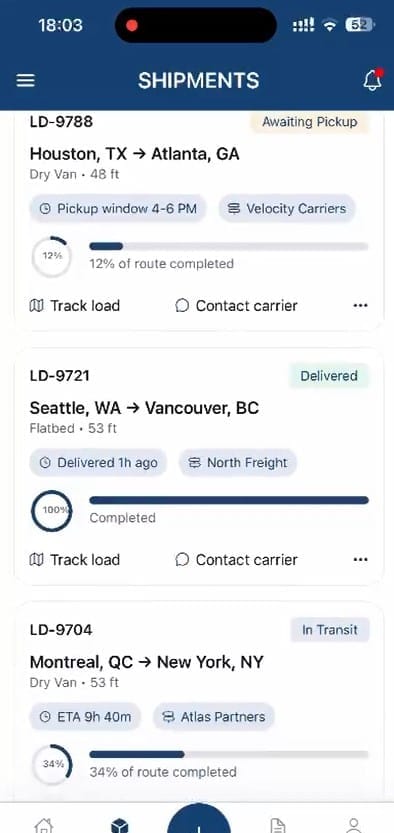
A modern load board can remain useful after a carrier and shipment first connect. Logistware brings freight discovery, transportation communication, digital documents and active shipment visibility closer together inside one connected workflow.
That gives the Montreal Load Board a practical technology story without relying on unsupported claims about proprietary artificial intelligence, container-availability predictions, live customs forecasting or direct integration with Port of Montreal operating systems.
Connected Freight Information From Montreal to Longer Lanes
The same freight workflow can continue when a shipment moves from Montreal toward another Canadian market or across the Canada–U.S. border.
When connected tracking is active, authorized participants can maintain shipment visibility while communication and relevant freight information remain associated with the transportation activity.
Advanced Digital Capabilities for Greater Montreal Freight
Connected Freight Workflow Instead of Unsupported Predictive Analytics
Freight Discovery and Capacity Sourcing
Carriers can review transportation opportunities while shippers and freight brokers can post freight and source potential transportation capacity through Logistware.
Explore the Truck Load BoardLive Freight Communication
Availability questions, pickup instructions, delivery requirements and shipment changes can remain closer to the transportation workflow.
Explore Logistware Live ChatDigital Freight Document Exchange
Relevant transportation paperwork can remain associated with the shipment for authorized users instead of being managed entirely through disconnected email threads.
Explore Document ExchangeReal-Time Shipment Visibility
When connected tracking is active, authorized users can follow freight movement and shipment status from pickup toward delivery.
Explore Real-Time Freight Tracking
Quebec Freight Communication and Documentation
Businesses operating in Quebec may need to coordinate shipment instructions, customer information or other business documentation in the language appropriate to their commercial and regulatory situation. That is a business requirement to manage correctly; this page does not claim a Montreal-specific automated translation or bilingual-compliance system.
Experience Connected Montreal Freight Technology Through Logistware
Traffic conditions, vessel schedules, terminal operations, customs processing, transportation rates and carrier availability can all change independently of a freight platform. Logistware supports transportation professionals around those conditions rather than pretending to control them.
Cheaper. Smarter. Stronger.
Montreal Load Board Connections Across Quebec and Eastern Canada
Montreal freight can connect with transportation activity throughout Quebec and into neighbouring Canadian markets. A shipment may begin locally and continue toward Laval, Ottawa, Toronto, Atlantic Canada or another longer-haul destination without requiring a separate software environment.
Logistware’s city and regional pages provide useful local search context while transportation professionals remain inside one broader Canadian freight platform.
- Quebec Load Board
- Laval Load Board
- Ottawa Load Board
- Toronto Load Board
- Greater Montreal freight
- Quebec freight
- Port-connected freight
- Intermodal transportation
- Ontario–Quebec freight
- Eastern Canada freight
- Canada–U.S. freight
- Long-haul Canadian transportation
One Logistware Account Across Changing Quebec Freight Markets
A carrier can begin with a Montreal load and continue using the same Logistware environment as operating lanes extend toward Laval, other Quebec markets, Ontario or the United States.
Shippers and freight brokers can likewise continue using the same platform as transportation requirements change from local Greater Montreal freight to regional, long-haul or cross-border movements.
Explore Quebec Freight Explore Canada–U.S. FreightMontreal Load Board Workflows for Canada–U.S. Cross-Border Freight
Montreal’s position within Quebec makes cross-border transportation relevant to many freight lanes serving the region. A Montreal shipment can move southbound into the United States or arrive northbound from a U.S. origin depending on the complete commercial movement.
Cross-border freight involves both the physical transportation movement and customs-related information. The shipper, importer, carrier, customs broker and other responsible parties may each have information or obligations that need to be coordinated before the truck reaches the border.
Complete International Lane
Confirm that the transportation provider can service the complete Canadian and U.S. origin-to-destination movement, not only the Montreal portion of the route.
Equipment Fit
The truck or trailer should match the commodity, dimensions, weight, temperature and handling requirements of the complete shipment.
Customs and Import Information
The appropriate parties should coordinate applicable Canadian or U.S. customs information before the freight reaches the border. A load board does not replace those responsibilities.
Freight Documents and Visibility
Transportation documents, shipment communication and freight visibility can remain connected to the broader Logistware workflow while the actual customs process is handled by the responsible parties.
Explore Cross-Border Freight
Cross-Border Montreal Freight Without Invented Customs Automation
Logistware supports freight discovery, transportation communication, shipment documents and freight visibility. It does not replace CBSA, CBP, importers, customs brokers or the government systems involved in moving commercial goods across the border.
That distinction removes the legacy page’s unsupported claims about automated customs documentation, real-time customs monitoring and guaranteed international compliance.
Sustainable Montreal Load Board Relationships for Long-Term Freight Growth
Greater Montreal freight depends on working relationships between carriers, shippers, freight brokers, dispatchers, manufacturers, distributors, importers, exporters, warehouses and other transportation participants.
Logistware gives those businesses a common freight environment where relationships can begin around actual transportation opportunities while the Montreal Load Board provides the relevant regional search context.
Creating Enduring Value Through Freight Collaboration
Long-term transportation relationships are built through clear shipment requirements, appropriate equipment, organized communication, useful business information and dependable execution.
Logistware helps keep more of that freight workflow connected without presenting Montreal as a separate proprietary carrier network, international logistics company or port-management system.
A Strategic Gateway for Freight Opportunity
Montreal’s multimodal transportation environment can connect marine, rail, truck, warehouse and industrial supply chains. Logistware provides a digital freight platform around transportation opportunities within that larger operating environment.
Partnering for a More Connected Freight Workflow
Carriers can evaluate available freight while shippers and freight brokers can post transportation requirements, source potential capacity and continue coordinating active shipments through the same broader platform.
Explore Truck Loads Through Logistware Post Freight Through LogistwareJoin the Montreal Load Board Experience Through Logistware
If you are searching for a Montreal Load Board, Logistware provides a Canadian freight platform where carriers can explore truck loads while shippers and freight brokers can post freight and source transportation capacity.
The relationship stays clear: Montreal is the freight market. Logistware is the platform. That preserves the Montreal Load Board keyword for Quebec and Greater Montreal search while maintaining one consistent Logistware brand and freight technology environment.
Take Logistware Wherever Freight Takes You.
Download the Logistware app today and keep your Montreal, Quebec and cross-border freight workflow connected when you are away from your desk. Access freight activity, shipment information and the broader Logistware platform from your mobile device.